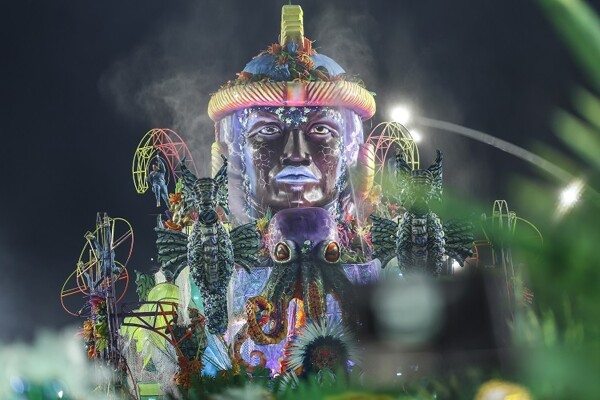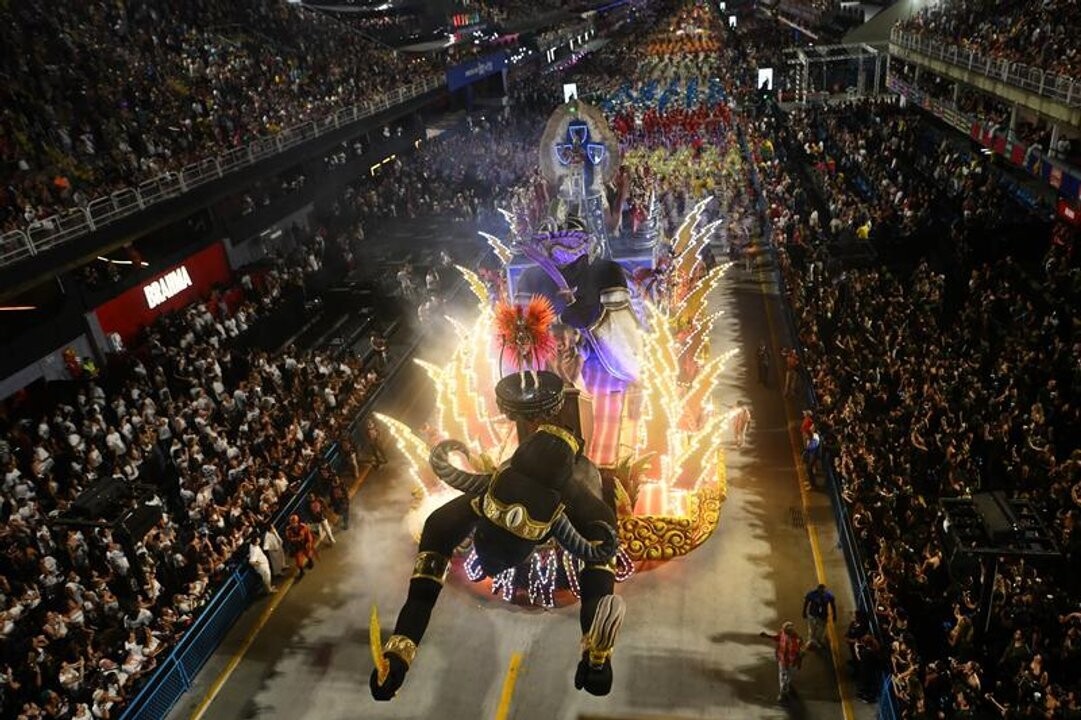
Rio de Janeiro, Feb 16 (NA) — The first night of Rio de Janeiro Carnival parades transformed the Sambadrome into a river of light, music, and emotion that seemed to have no boundaries. Rio de Janeiro was once again transformed into a great open-air stage.
Giant allegorical floats showcased scenes of factories, working-class neighborhoods, and public squares, while hundreds of dancers wore costumes blending symbols from Brazil's northeast with intense red and gold colors. The audience responded with long applause and chants that merged with the samba-enredo, turning the Sapucaí into a massive chorus.
Following that politically charged opening, the avenue was dyed with art and metamorphosis with the arrival of Imperatriz Leopoldinense. Its parade was a tribute to creative freedom and the figure of singer Ney Matogrosso, an icon of Brazilian music. The costumes, dominated by green, violet, and silver tones, reflected a carnival that dialogues with theater, contemporary dance, and pop culture.
Entire families shared seats in the stands, tourists mixed with veteran samba dancers, and photographers ran back and forth trying to capture the perfect moment: a twirl of a skirt, a tear of emotion, or a kiss thrown to the crowd from a float. Each school left its mark, and the audience responded with an energy that remained vibrant until dawn; outside the Sambadrome, the city continued to beat to the rhythm of carnival.
In neighborhoods like Lapa, Copacabana, and Santa Teresa, street blocs filled the streets with music and improvised costumes. When the lights on the stands dimmed for an instant and the roar of the opening battery was heard, the avenue became a giant stage where every step was a declaration of identity.